Products Description
Introduction to MVR (Mechanical Vapor Compression) Evaporation System
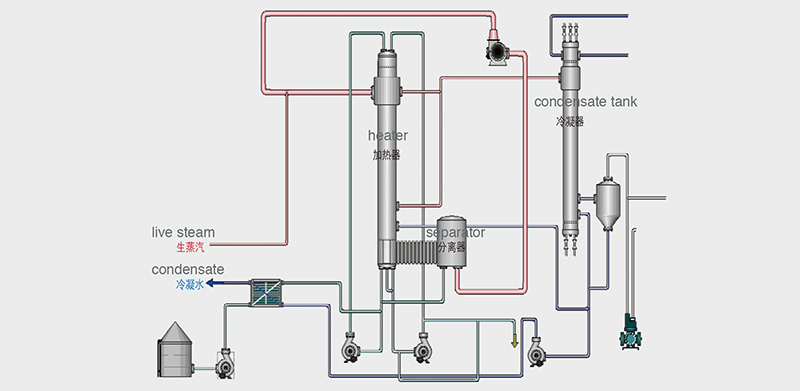
The MVR evaporation system uses a compression fan to compress and increase the pressure of the secondary steam formed in the evaporation system. The condensation temperature of the compressed secondary steam increases and can be used as a heat source for the evaporation system. Under appropriate conditions, the system does not require additional steam to complete evaporation; When the feed temperature is lower than the evaporation temperature of the system and sufficient heat energy cannot be recovered from the concentrated liquid and the condensed water generated by the system, a small amount of steam needs to be added to preheat the material to its boiling point. The energy consumption of a compressed air fan for evaporating one ton of water is usually within the range of 15KW to 30KW; According to the characteristics of the material, it may also be lower or higher than this range.
Product Features
No need to generate steam
Low energy consumption and low operating costs
Can be combined with a crystallizer to create a continuous crystallizer in the form of MVR
Design and manufacturing scope of MVR evaporator
Chemical and pharmaceutical industries
Alcohol phenol, methanol, ethanol, butanol, glycerol, ethylene glycol
Pharmaceutical solution enzymes, antibiotics, drug extracts, sugar substitutes, sorbitol, sorbitol, gluconate
food industry
Dairy products including whole and skim milk, condensed milk, sweet whey and lactic acid, butter, milk protein, lactose solution
High protein soy whey, yeast extract, and feed yeast
Orange juice and other citrus juices, apple juice and other apple juices, mixed juices, tropical fruit juices
Vegetable juice, lettuce juice, beetroot juice, tomato juice, carrot juice
Starch products include glucose, D-glucose, L-glucose, maltose, starch syrup, and dextrin
Sugar beet sugar, liquid sugar, refined white sugar, sweet water
Extract meat and bone extract, coffee and tea extract, hops extract, malt extract, yeast extract, pectin
Hydrolyzed substances such as milk hydrolysate, seasoning liquid, and protein hydrolysate
Application scope of continuous crystallizer
Lactose potassium chlorate, chlorocyclohexane carbonate, sodium nitrite, ammonium bromide, ammonium citrate, ammonium chloride, potassium chlorate, sodium perborate, sodium hydrogen ammonium chloride, copper chloride, magnesium dichromate, sodium perchlorate, sodium ammonium sulfate, copper sulfate, glucose, magnesium permanganate, sodium chromate, sodium phosphate, sodium thiosulfate, sodium dichlorobenzoate, potassium chloride, sodium salicylate, sodium ascorbate, vitamin C, dicyandiamide, methionine, potassium sulfate, sodium dichromate, sodium bisphenol A, diisopropyl ether, nickel salicylate, sodium salt, sodium bisulfite, sodium tartrate, sodium caffeine, wastewater recovery, nickel nitrate, silver nitrate, sodium fluoride, sodium thiocyanate, calcium chloride, iron pentaerythritol, sodium formate, sodium formate, zinc formate, calcium butenate, potassium bromide, pit hemorrhage, sodium glutamate, sodium acetylsalicylate, sodium tartrate, calcium tartrate Glutamic acid potassium carbonate potassium nitrate copper gulosote Fat ammonium carnallite
Technological process